Judge Strikes Down Eviction Moratorium

– BUT WAIT! Not so fast…

The first thing you need to know is that the Justice Department immediately appealed and asked for an emergency stay of judgment.

The judge agreed to hold the eviction moratorium ruling for a week until May 12th.

For what it’s worth, the whole matter was deciding whether the Center for Disease Control (CDC) had the authority to impose a federal, nationwide eviction moratorium on landlords.  

The moratorium prevented residential landlords from evicting single renters making less than $99,000 and families making less than $198,000. The judge’s pending ruling is that the CDC does not have that authority. So here is what is likely to happen either way:


If the ruling stands, after May 12th in Florida,

    • Landlords can evict residential tenants for failure to pay rent.
    • State-issued moratoriums, like those in New York, will not be affected.  However, the Florida eviction moratorium expired in October of 2020.

If the ruling does not stand and is overturned by the U.S. Court of Appeals, the CDC ruling will remain in effect until June 30th, unless it extended again by Congress or a Presidential Executive Order.

If you are a landlord that has tenants that have not been paying their rent and would like to evict, you first have to give a “3 Day Notice,” which is a 3 business-day notice of demand for payment or possession of the property before you can file for eviction.

There are very specific rules and timelines laid out in the Florida Statutes on the eviction process.

If you would like to prepare for the potential federal ruling being upheld on May 12th, you need to begin the process now, as in today.

We are experienced in evictions and can help you navigate the process so that you can begin to recoup back rent or reclaim the possession of your properties.

Call our office at 305.722.8015, or visit our website at www.CasaisLaw.com to set up a free case evaluation.

eviction moratorium

How To File Your Case With A Miami Family Law Firm

When it comes to legal battles involving family issues, filing your case can present quite the challenge. Follow this guide for the steps you need to correctly file your case with our Miami family law firm, Casais & Prias, to secure the best possible outcome.

Scroll down to hear Family Attorney Nadja A. Prias explain the Florida requirement of taking parenting classes in cases involving divorce, paternity, or custody.

Find The Right Miami Family Law Firm For You

Legal battles surrounding family matters are best left to firms that have the knowledge and experience needed to successfully fight your case. Our lead family attorney Nadja A. Prias is a certified Family Law Mediator by the Florida Supreme Court and brings extensive expertise to her practice. With certifications as a Guardian Ad Litem and a strong track record of handling complex and contentious cases, she has successfully taken them to trial. Furthermore, she has effectively prosecuted and defended domestic violence injunction cases. Clients can have complete confidence that Ms. Prias prioritizes their best interests throughout the entirety of their legal representation, from the outset of their case until its final resolution.

Our Miami family law firm represents clients dealing with a variety of family matters, including:

These are some of the more common matters handled in family court, though the comprehensive list extends beyond these issues. Once you have decided on a Miami family law firm like ours, you are ready to move forward with the filing process.

Miami family law firm

Completing And Filing Required Documents

As with all legal matters, you are required to fill out a variety of forms before the judge can hear your case. Now is the time to gather everything you wish to present at the hearing and bring it to the attention of your attorney. They will proceed with completing the corresponding forms needed for filing by taking your case details into account.

This part of the process is where our experience as a Miami family law firm truly sets us apart. Our lawyers are here to provide you with personalized attention by taking the time to become familiar with you and your situation in order to get the best results for your case. We are dedicated to guiding you through each step of case preparation and are committed to keeping you well informed along the way.

Together, you and your attorney will double-check all documents to ensure that they are complete and accurate. It is recommended that you keep a copy of these forms for your records. You should also bring them with you to each hearing.

Choose A Miami Family Law Firm You Can Trust

Taking family and probate matters to court can be stressful and overwhelming if you do not know where to start. Once you have decided that a legal course of action is right for your case, you want to be sure that you have chosen a family law firm you can rely on. The attorneys at Casais & Prias understand the hardships involved in family related issues, and are prepared to use their experience to get the justice that you deserve.

Contact us today to request a free case evaluation and we will work to help guide you through this challenging time.

What Sets Us Apart As A Coral Gables Immigration Law Firm

Applying for a change in immigration status might seem daunting, but a skilled Coral Gables immigration law firm can guide you through the process.

The attorneys at Casais & Prias, based in our Coral Gables immigration law firm, possess extensive experience across a wide spectrum of immigration services. They stand prepared to assist you with your case.

Why Trust Us?

We aim to streamline your immigration process for ease and clarity. Our attorneys collaborate closely with you, offering a tailored and attentive approach to your case. Understanding your specific requirements is our priority, and as a trusted Coral Gables immigration law firm, we endeavor to achieve the most favorable outcomes for you.

We Have The Experience You Need

Immigration applications are often lengthy and complex, involve areas of law that are constantly changing, and require very specific documentation that demands close attention to detail. This is why it is important that you hire a highly experienced immigration law firm to help you navigate the immigration process from start to finish.

Attorney Rolando Casais, Jr., leads our immigration department and serves on the board of directors at the AILA. A Miami native fluent in both English and Spanish, he holds vast experience in immigration law practice. Whether you require any of the following services, Mr. Casais is fully prepared to handle your case.

  • Processing and submission of immigrant and non-immigrant visa petitions
  • Family immigration
  • Naturalization
  • Change of status
  • And other related services
Coral Gables Immigration Law Firm

Serving Our Community As A Coral Gables Immigration Law Firm Since 2009

Casais & Prias has been helping clients in Miami-Dade County and across the U.S. since 2009. With our roots in Little Havana, Hialeah, Brickell, and Westchester, our experience in this area gives us a familiarity with the community’s culture and its people’s legal needs. Though every case and client is unique, a shared cultural background helps us best understand your case and you, as our client. We are also proud to offer bilingual legal services.

Our Flexibility Fits Your Needs

Understanding that physical limitations might hinder office visits for immigration services, we offer convenient alternatives like phone and virtual consultations alongside in-person assistance. As a boutique Coral Gables immigration law firm, we prioritize addressing our clients’ requirements and nurturing an open client-attorney bond, distinguishing us from other local firms. Be assured, we are committed to accommodating your specific situations and delivering outstanding service.

The attorneys at Casais & Prias are here to serve you and your immigration law needs. If you are ready to consult with us to start your legal immigration process, contact us today to request a free case evaluation.

Temporary Protected Status (TPS) for Venezuelan Nationals

On March 8, 2021, the U.S. Department of Homeland Security designated Venezuela for Temporary Protected Status (TPS) for a period of 18 months, until September 9, 2022.

Scroll to the end to hear Rolando Casais, Jr., a founding partner of Casais & Prias, explain Temporary Protected Status.

Temporary Protected Status is a temporary immigration status provided to nationals of specifically designated countries that are confronting an ongoing armed conflict (such as civil war), environmental disaster (such as earthquake or hurricane), or other extraordinary and temporary conditions. It provides a stay of deportation to foreign nationals from those countries who are in the United States at the time the U.S. government makes the designation.

New Designation

This new designation of Temporary Protected Status for Venezuela enables Venezuelan nationals currently residing in the United States to file initial applications for TPS, so long as they meet eligibility requirements. Only individuals who can demonstrate continuous residence in the United States as of March 8, 2021 are eligible for TPS under Venezuela’s designation. Applicants are also eligible to apply for employment authorization that will be valid through September 9, 2022.

Once granted Temporary Protected Status, an individual may not be detained by DHS based on his or her immigration status in the United States. TPS is a temporary benefit that does not lead to legal permanent residence, U.S. citizenship, or any other immigration status. All individuals applying for TPS undergo security and background checks as part of determining eligibility.

Eligibility

Individuals are not eligible to apply for Temporary Protected Status if they have been convicted of any felony or two or more misdemeanors committed in the United States, are found to be inadmissible, or fail to meet the continuous physical presence and continuous residence in the United States.

Temporary Protected Status (TPS) for Venezuelan Nationals

Application Process

To apply for Temporary Protected Status under Venezuela’s designation, applicants must register during the 180-day registration period that runs from March 9, 2021 through September 5, 2021. To apply for TPS, applicants must submit the following documents with their application:

  • Venezuelan passport;
  • Venezuelan birth certificate (with English translation);
  • I-94 – arrival/departure record;
  • Proof of residence in the U.S. as of March 8, 2021 such as a copy of residential lease, mortgage statements, utility bills (gas, electric, phone, water), school records, medical records, etc.;
  • Arrest records or criminal history (if any).

If you are or know a Venezuelan national that would like to apply for Temporary Protected Status, please contact the Law Office of Casais and Prias at (305) 722-8015 or info@CasaisLaw.com. Our experienced immigration attorney will represent you in preparing and submitting your applications for TPS and employment authorization.


What Are Grounds For Dissolution of Marriage in Florida?

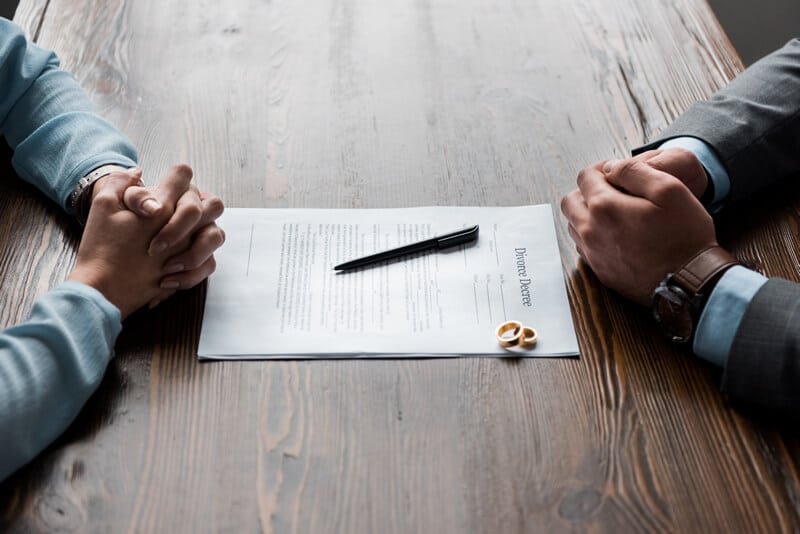
There are only two things in Florida that are grounds for divorce. Getting a divorce in Florida requires you to file what is known as a Petition for Dissolution of Marriage.

Aside from basic details about the marriage and the parties in the marriage, you have to indicate a reason for the divorce. As practical as it may seem, in Florida, there is no need to get all wrapped up with the reasons that led to the decision to get a divorce because it is a “No Fault” state, and what that means will be further explained below. However, because it is a no-fault state, there are only 2 things that are grounds for Divorce or the Dissolution of Marriage in Florida:

Irreconcilable Differences

This is the most common reason for divorce. Florida is a no-fault divorce state, which means that no one is assigned fault by the court. You do not need to claim adultery, abandonment, or cruelty. If you do not want to be married, in Florida you do not have to be. There is only a need for the party that is filing for divorce to indicate that the marriage is “irretrievably broken.” These are known as irreconcilable differences. All this means is that the couple is no longer able to co-exist amicably.

Dissolution of Marriage in Florida

Mental Incapacity

The second ground for dissolution of marriage occurs when one of the parties is mentally incapacitated. However, a dissolution of marriage will not be allowed unless the party alleged to be mentally incapacitated has been adjudged incapacitated for at least 3 years prior to the divorce being filed.

If you have any questions as to whether you have irreconcilable differences or whether your spouse has been adjudged incapacitated, please contact Casais & Prias. Our firm will take an individualized approach to identify the strategy that works for you.

Uncontested vs. Contested Divorce in Florida

A divorce can be processed in two different ways. It can be uncontested or contested. Before filing for divorce, it is important for both parties to consider how an uncontested vs contested divorce in Florida will affect them and their family.

When a married couple wants to end the marriage amicably, it means that they are willing to divorce by cooperating instead of litigating. The couple must agree to how the property they own and debt they incurred will be divided. If there are children, the parents will also agree to the parenting plan that will detail who the children will be living with and who will be responsible for child-related expenses. This makes the divorce uncontested because all the issues are resolved outside of the court.

During this process, it is very important to have a devoted attorney assist you in order to make sure that there are no delays and that your interests are properly protected. Even in an uncontested divorce, there is a need for preparation of pleadings and the drafting of a marital settlement agreement that accurately portrays the decisions you have made. Sometimes, there is a need to amicably negotiate or creatively help with issues that you or your spouse are not sure about. This is the reason why you would hire an experienced attorney to represent you in an uncontested divorce.

A contested divorce happens when the couple cannot agree. This process takes a lot longer to finalize and may take a greater toll on the family both emotionally and financially. However, At Casais & Prias Law, we will make sure that we make your needs a priority and that those needs are properly explained to the judge who will make the decisions on the issues that you and your spouse do not agree on.

If you are still unsure about whether you will be proceeding with an uncontested vs contested divorce in Florida, contact the experienced attorneys at Casais & Prias Law.

uncontested vs contested divorce in florida

What to Expect at a Same Sex Marriage Immigration Interview

When a U.S. Citizen files an immigration petition on behalf of their non-citizen same-sex spouse, the couple will need to attend an interview before a USCIS officer.

It is important that you adequately prepare and get yourself organized for the interview. At the interview, the officer will review the applications filed as well as all the documentation submitted in support of the applications and the officer will ask questions about the applications and the couple’s relationship.

Interview Part 1

In the initial phase of the interview, the USCIS (United States Citizenship and Immigration Services) officer will carefully review the applications submitted and seek clarification, updates, or changes related to the information provided. This usually involves inquiries regarding the couple’s personal details, such as names, dates of birth, employment and address history, marriage history, criminal background, and other admissibility-related questions.

Additionally, the officer will request original birth certificates, original marriage certificates, and any original supporting documents that were initially submitted with the application.

same sex immigration

Interview Part 2

During the second part of the interview, the USCIS officer will ask the couple questions regarding the couple’s relationship. Usually, this starts with the question, “How did you meet?” Follow up questions pertain to when the couple began living together, who else lives in the home with the couple, who proposed to whom and when, if either spouse has met the others spouses family, etc. Sometimes officers may inquire from one spouse if they are aware if the other spouse has any medical conditions, has ever had any major medical procedure, and/or if the other spouse has any markings on their body such as birth marks, scars, or tattoos.

It is very important that you are prepared to be asked these types of questions and are prepared to answer them. There is no right or wrong answer to any of these questions. The only appropriate answers are the truth.

How We Can Help

As part of the services Casais & Prias provides to our clients, prior to the interview we will prepare you for the questions that will be asked, what documents need to be organized and ready to turn over to the officer, and our immigration attorney will attend the USCIS interview with you. You will have your attorney present throughout the entire process. Contact our team of immigration attorneys today to discuss your claim and how can can serve you.

What is Tax Fraud in Miami?

Tax fraud is a serious charge and if you are being investigated, you need a professional tax fraud in Miami attorney.

Keep reading to see tax lawyer, Rolando Casais Jr., explain what tax fraud is and how you can avoid it.

What Is Tax Fraud in Miami?

Tax fraud occurs when a business or individual willfully and intentionally provides false information on their tax return in order to reduce their federal tax obligations. In other words, tax fraud is cheating and/or lying on your tax return in order to eliminate or substantially reduce the amount of tax you are required to pay.

This is usually done in one of two ways:

  • By understating your income, or
  • Overstating your expenses

Both of these instances will result in an incorrect calculation of taxable income and therefore an incorrect calculation of tax due.

For example, if a business owner were to purposefully state on their tax return that their insurance expense, rent expense, costs of goods, materials expense, supplies expense, wage expense, etc., is more than what they actually paid, this would result in a decreased taxable income and decreased tax due. This business owner would have committed tax fraud.

What is the Penalty for Tax Fraud in Miami?

Tax fraud carries a hefty 75% penalty, may be criminal in nature, and may carry a 5-year federal prison sentence for each count. You may even be facing thousands of dollars in fines. These penalties are severe and are best left in the hands of an experienced firm.

Casais & Prias has worked on tax-related cases for over ten years and knows what it takes to effectively manage accusations of tax fraud in Miami.

Rolando Casais Jr. is one of the leading attorneys at our firm. He focuses in tax law and even has experience working as an agent for IRS. This knowledge shines through on the cases he works on and will help you to get a better grasp of how to handle your tax fraud case.

It is important to note that a mistake on your tax return is not tax fraud. For example, if a bookkeeper were to accidentally transpose numbers while entering them in the books, which results in a reduced calculation of taxable income and tax, this would be a mistake and is not tax fraud. However, a mistake is subject to a 20% accuracy-related penalty.

Tax fraud in Miami

Contact Casias & Prias, PLLC.

If you are being audited by the IRS, or if you are being investigated by the U.S. Department of Justice on suspicions of tax fraud, or if you have been indicted on allegations of tax fraud, be sure to contact the Law Office of Casais and Prias. We can help you develop a legal defense and reduce your exposure and liability for tax fraud in Miami.

Have I Accrued Unlawful Presence in the United States?

How Do I Know I Have Accrued Unlawful Presence?

Read on to hear Immigration Attorney Rolando Casais, Jr. explain what to do if you have accrued Unlawful Presence.

There are two ways you could have accrued unlawful presence in the United States and Casais & Prias, PLLC. is here to explain what you need to know.

The first is if you are in the United States without having been inspected or admitted into the country by an immigration officer. In other words, you are unlawfully present if you entered the United States by crossing the border at a place other than a designated port of entry and/or without having been inspected by an immigration officer. If you crossed the border without inspection, you began to accrue unlawful presence in the United States on the day you entered the country.

The second way to accrue unlawful presence is if you remain in the United States past the period of time granted to you when you entered the country. Specifically, you are unlawfully present in the United States if you came into the country with a visa, were admitted and inspected by an immigration officer, but you did not leave by the date you were supposed to leave by. If you stayed in the United States past the specific date you were required to leave by, you typically start to accrue unlawful presence in the United States the day after you were supposed to leave.

In either of these circumstances, it is incredibly important that you seek the legal aid of an experienced attorney to assist you through your next steps. At Casais & Prias, our attorneys have over ten years of experience working on immigration cases and are equipped with the knowledge and skills needed to effectively approach your situation.

What are the Penalties of an Unlawful Presence in the United States?

If you depart the United States after having accrued more than 180 days but less than one year of unlawful presence, you may be barred from entering the United States for a period of three years. If you depart the United States after having accrued more than one year of unlawful presence, you may be barred from entering the United States for a period of ten years. If the three or ten-year unlawful presence bar applies to you, you usually cannot get a U.S. visa, enter the U.S., or obtain any immigration benefits (such as permanent residency).

However there are legal exceptions to the three and ten-year bar, such as for immediate relatives, VAWA self-petitioners, and certain special immigrants, to name a few.

accrued unlawful presence

How Can Casais & Prias Help If I Have Accrued Unlawful Presence?

If you believe that you have accrued unlawful presence in the United States and are subject to the three or ten-year bar, it is very important that you contact an experienced immigration attorney. Contact the Law Office of Casais and Prias today.


Am I Eligible for Naturalization?

There are many requirements you must meet, so you may be asking, “Am I eligible for naturalization?” We’re here to explain.

Scroll down to hear Attorney Rolando Casais, Jr. explain the process of becoming a U.S. Citizen.

The terms citizenship and naturalization may seem interchangeable but they are slightly different. Citizenship is given at birth or acquired through naturalization. To gain citizenship, you must be eligible for naturalization by meeting the requirements established by Congress in the Immigration and Nationality Act (INA).

How To Become A U.S. Citizen Through Naturalization

If you were born outside the United States, naturalization is the legal process of becoming a US citizen. There are many requirements you must meet, so you may be asking, “am I eligible for naturalization?”

What Are The Requirements For Naturalization?

To begin, you must be at least 18 years old at the time you apply, you must be a lawful permanent resident of the United States for at least five years (typically), and you must continuously live and be physically present in the United States.

You must be able to show that you are a person of good moral character. Good moral character is character that measures up to the standards of the average citizen in the community. Good moral character is determined on a case-by-case basis, however, there are various types of conduct that will automatically prevent you from showing good moral character. You cannot show good moral character if you have been convicted of an aggravated felony, if your income comes from illegal gambling, if you are a habitual drunk, or if you have lied to an immigration officer, to name a few.

As part of the naturalization process, you will be required to attend an interview where it will be necessary for you to show the ability to read, write, and speak in English. The naturalization interview is an in-depth interview where the immigration officer inquires into your personal background including your marriage history, your children and parents, trips taken outside the United States, criminal history, your association with groups, clubs, and organizations, and much more.

You must also show knowledge and understanding of U.S. history and the U.S. form of government, display loyalty to the principles of the U.S. Constitution, and you must be willing to take the Oath of Allegiance.

am I eligible for naturalization

Stop Searching “Am I Eligible for Naturalization” and Contact Us Today

If you would like to apply for naturalization, please contact the Law Office of Casais and Prias. Our attorneys will represent you in preparing and submitting your application for naturalization, we will prepare you for the naturalization interview, and an attorney will accompany you to the naturalization interview.